
Nexpand row-based coolers for data centers
With a growing industry that demands green data centers and therefore an optimized energy consumption, cooling plays a key role to ensure that data centers can perform at their best, while constraining the energy demands of these devices. When we talk about data center cooling, we mean transporting heat generated by IT equipment to the ambient air to maintain optimal temperatures and humidity levels for equipment within a data center facility.
Minkels provides a leading portfolio of active cooling solutions suitable for all requirements. Active cooling is close to the heat source, shortening the airflow path, decreasing the fan units’ power consumption, and providing a fast and dynamic response by the coolers to changing heat densities. The Nexpand row-based active cooling units are placed next to the cabinets and can handle heat loads ranging from 10kW to 60kW. Our row-based coolers are fitted in the Nexpand frame for a seamless integration in the containment. Achieving maximum airtightness and compatibility with most Nexpand accessories.


Nexpand CW
Chilled water (CW) cooling solutions rely on a central chiller to circulate chilled water through a heat exchanger. The chilled water will absorb heat from the warm air via the heat exchanger to cool down the ambient air. CW solutions offer higher cooling capacities to face the most demanding applications, these prove to be more energy efficient when the heat load of the containment goes beyond 100kW. Applications such as high performance computing, artificial intelligence, gaming or crypto mining are commonly demanding this need. Read more >>
Nexpand DX
A direct expansion (DX) cooling solution is a refrigeration system that cools air by direct expansion of a refrigerant. Nexpand DX solutions prove to be more energy efficient when the heat load of the containment is below 100kW. This means that DX deployments are to be expected in small or medium size containment solutions where the heat densities per rack are not too high, commonly around 5kW per rack.
Read more >>
Aisle Containment with row-based active cooling
-
A perfect integration of passive cooling technology (doors, roof and airflow management packages) and active coolers;
-
Nexpand is the best in class airflow management to improve airflow paths, to prevent hotspots
-
Supports both hot and cold containment configurations;
-
Room independent solution. No raised floor or false ceiling required;
-
Often a more flexible and scalable solution, as the data center’s needs change or grow.

Nexpand row-based coolers for data centers products:
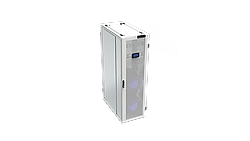
Nexpand CW - Chilled Water cooling solutions
The CW cooling solution offers higher cooling capacities to face the most demanding applications. These prove to be more energy efficient when the heat load of the containment goes beyond 100kW.
Read more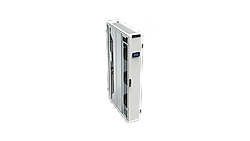
Nexpand DX - Direct Expansion cooling solution
The DX cooling solution is available as a turn-key system meaning both the indoor unit (placed adjacent to the IT cabinets) and outdoor unit are part of the delivery. The indoor unit contains the compressor, and the outdoor unit is a remote condenser.
Read more